... Virus genetic material (in the form of RNA) and virus proteins group in one area near the cell’s outer membrane. They begin coming together to form an immature virus particle.7. BuddingAs thousands of viral proteins come together, they start to push their way out of the cell, creating a bulge on the cell’s surface. This is called budding. ...
HIV as a Retrovirus: Life Cycle and How It Infects a Cell
... Virus genetic material (in the form of RNA) and virus proteins group in one area near the cell’s outer membrane. They begin coming together to form an immature virus particle.7. BuddingAs thousands of viral proteins come together, they start to push their way out of the cell, creating a bulge on the cell’s surface. This is called budding. ...
... This is done by testing for HIV-1 genetic material (RNA) with a nucleic acid amplification test (NAAT). However, an HIV-2 NAAT is not routinely available to test for HIV-2, and further testing may be needed if a person is at risk for this infection.Diagnosing HIV-1 and HIV-2 infection is recommended by the testing sequence just mentioned. ...
HIV-1 vs. HIV-2: What Are The Differences and Can You Have Both?
... This is done by testing for HIV-1 genetic material (RNA) with a nucleic acid amplification test (NAAT). However, an HIV-2 NAAT is not routinely available to test for HIV-2, and further testing may be needed if a person is at risk for this infection.Diagnosing HIV-1 and HIV-2 infection is recommended by the testing sequence just mentioned. ...
... Viral load tests, which require a blood sample, can measure how much HIV genetic material is in a person’s blood.The polymerase chain reaction (PCR) test is another early test that can diagnose HIV and determine viral load. PCR tests can be effective within two to three weeks of exposure. ...
Diagnosing HIV
... Viral load tests, which require a blood sample, can measure how much HIV genetic material is in a person’s blood.The polymerase chain reaction (PCR) test is another early test that can diagnose HIV and determine viral load. PCR tests can be effective within two to three weeks of exposure. ...
... If you take one of these tests before this time period, you may receive a false-negative result, meaning that your test reads negative although you might still be infected with HIV.Nucleic acid tests (NATs) for HIV detect the actual genetic material (RNA) of the HIV virus, so they don’t depend on the immune system to build a response. ...
HIV-Negative Facts: Can You Get HIV if You and Your Partner Are Negative?
... If you take one of these tests before this time period, you may receive a false-negative result, meaning that your test reads negative although you might still be infected with HIV.Nucleic acid tests (NATs) for HIV detect the actual genetic material (RNA) of the HIV virus, so they don’t depend on the immune system to build a response. ...
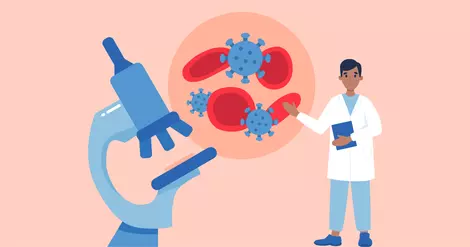
... HIV is a retrovirus, which means it stores its genetic material in a special way and copies itself inside the body’s cells. It mainly attacks a certain type of white blood cell called a CD4 cell, also known as a T-helper cell. ...
... There are also blood tests called nucleic acid tests (or NATs), which look for the presence of the viral genetic material in your bloodstream.How To Use the OraQuick In-Home HIV Test KitThe OraQuick In-Home HIV Test kit comes with a padded wand that you swipe once along both your upper and lower gums. ...
OraQuick In-Home HIV Test Kit: FAQs, Tips, and What To Expect
... There are also blood tests called nucleic acid tests (or NATs), which look for the presence of the viral genetic material in your bloodstream.How To Use the OraQuick In-Home HIV Test KitThe OraQuick In-Home HIV Test kit comes with a padded wand that you swipe once along both your upper and lower gums. ...
... Nucleic acid tests (NATs) — These look directly for HIV’s genetic material in the blood. These tests may not detect HIV right away after exposure. Talk to your healthcare provider about when to get tested and how often.Are Tests for HIV and Herpes the Same?Tests for HIV and herpes aren’t the same. Instead, each test is specific to the virus. ...
Herpes vs. HIV: What’s the Difference Between Them?
... Nucleic acid tests (NATs) — These look directly for HIV’s genetic material in the blood. These tests may not detect HIV right away after exposure. Talk to your healthcare provider about when to get tested and how often.Are Tests for HIV and Herpes the Same?Tests for HIV and herpes aren’t the same. Instead, each test is specific to the virus. ...
... But people with HIV who have weakened immune systems need to be extra cautious to avoid opportunistic infections that can attack when the immune system is down. Someone living with HIV who has a low CD4 count can get severely ill from something as simple as a common cold. ...
HIV and Living With Family: 6 Tips for Safety
... But people with HIV who have weakened immune systems need to be extra cautious to avoid opportunistic infections that can attack when the immune system is down. Someone living with HIV who has a low CD4 count can get severely ill from something as simple as a common cold. ...
... Scientists have found that in people who are HIV-positive, their immune system mounts an attack against the virus, leading to inflammation.Several studies have shown long-term inflammation in the brain may lead to a higher rate of depression in people living with HIV. ...
Fatigue and HIV: 6 Tips for Boosting Energy
... Scientists have found that in people who are HIV-positive, their immune system mounts an attack against the virus, leading to inflammation.Several studies have shown long-term inflammation in the brain may lead to a higher rate of depression in people living with HIV. ...
... It can also attack the lungs, heart, brain, or gastrointestinal system.Mycobacterium Avium Complex Mycobacterium avium complex (MAC) is a group of common bacteria that causes the following symptoms in people with AIDS: Abdominal pain Fever Night sweats Weight loss Anemia Fatigue MAC can cause widespread illness in people with more advanced immunosuppression ...
HIV Stages and Symptoms
... It can also attack the lungs, heart, brain, or gastrointestinal system.Mycobacterium Avium Complex Mycobacterium avium complex (MAC) is a group of common bacteria that causes the following symptoms in people with AIDS: Abdominal pain Fever Night sweats Weight loss Anemia Fatigue MAC can cause widespread illness in people with more advanced immunosuppression ...







 Join
Join